Tennis Elbow Symptoms, Causes & Diagnosis: The Complete Guide
The common signs of tennis elbow, what causes it, who tends to get it, how it's diagnosed, and when to see a doctor.
Read more: Tennis Elbow Symptoms, Causes & DiagnosisEducational information · Not a diagnosis tool
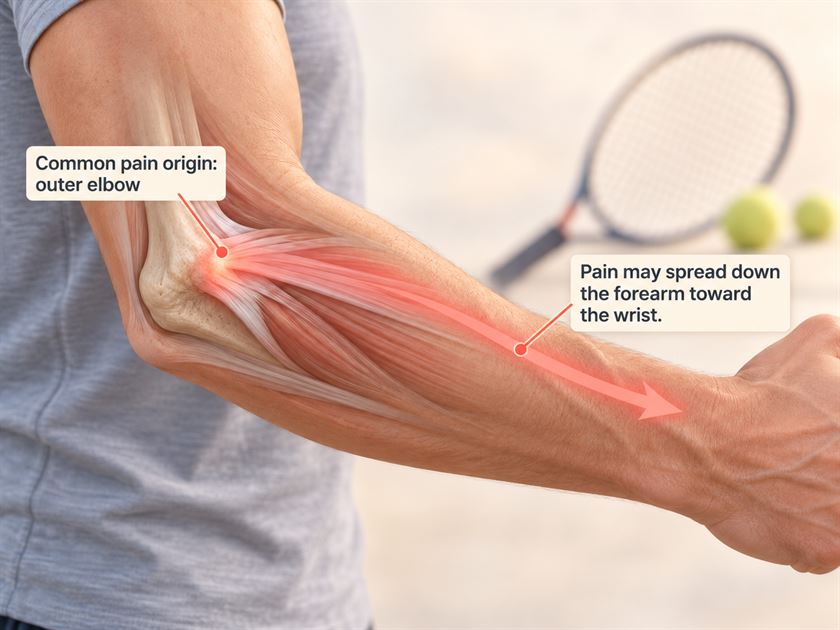
Tennis elbow is a common name for pain around the outside of the elbow. Despite the name, it can affect people who have never picked up a racket, including people whose work, hobbies or daily tasks involve a lot of gripping and wrist movement.
This site explains the basics in plain language and describes general options people discuss with their healthcare professionals. Only a qualified professional can assess your own symptoms.
Learn
Short, plain-language introductions to the topics people ask about most.
The common signs of tennis elbow, what causes it, who tends to get it, how it's diagnosed, and when to see a doctor.
Read more: Tennis Elbow Symptoms, Causes & DiagnosisTen common approaches, from home care and supports to medical treatments, and how they compare.
Read more: Tennis Elbow Treatment OptionsSeven commonly used exercises with step-by-step instructions, a pain guide, and a sample 12-week plan.
Read more: Tennis Elbow ExercisesTypical recovery timelines, the stages of healing, what can slow recovery, and returning to sport and work.
Read more: How Long Does Tennis Elbow Last?Where and how to wear a tennis elbow strap, the main types of support, and common fitting mistakes.
Read more: How to Wear a Tennis Elbow BraceAdjusting how often, how long or how hard you do the tasks that bring on discomfort. For example, you might break up repetitive work with short pauses or spread heavy jobs across the day.
Suitability varies from person to person.
After an assessment, a physical therapist or other qualified clinician may suggest exercises and explain how and when to adjust them.
Suitability varies from person to person.
Some people wear a forearm strap (often called a counterforce strap), an elbow sleeve or a wrist support during activities that bring on discomfort.
Suitability varies from person to person.
Reusable cold packs, heat wraps and similar products that some people use for short-term comfort.
Suitability varies from person to person.
Massage balls, rollers, handheld massagers and similar tools that some people use on the forearm muscles.
Suitability varies from person to person.
Changes to tools, equipment or your workstation that may reduce strain from gripping and repeated wrist movement, such as handle size, mouse and keyboard position, or sports equipment.
Suitability varies from person to person.
Depending on your situation, a clinician may discuss other approaches, such as medicines, injections or procedures.
Suitability varies from person to person.
Before you try an exercise: ask a qualified healthcare professional whether it's appropriate for you. Follow the original creator's instructions, and stop if an exercise causes sharp, worsening or otherwise concerning symptoms.
Rhesus Medicine
Watch on YouTube: Understanding Tennis Elbow and Golfer's Elbow (Lateral & Medial Epicondylitis) (opens in a new tab)Doctor O'Donovan
Watch on YouTube: Doctor explains TENNIS ELBOW (lateral epicondylitis) | Symptoms, causes, & treatment (opens in a new tab)E3 Rehab
Watch on YouTube: Tennis Elbow Rehab (Education | Myths | Stretching & Strengthening Exercises) (opens in a new tab)AskDoctorJo
Watch on YouTube: 7 Best Tennis Elbow Pain Relief Treatments (Lateral Epicondylitis) - Ask Doctor Jo (opens in a new tab)Rehab Science
Watch on YouTube: 3 Home Exercises for Tennis Elbow (opens in a new tab)Alex Wallace
Watch on YouTube: How to Lift With Tennis Elbow (opens in a new tab)FAQ
Tennis elbow is a common name for pain around the outside of the elbow. It is often associated with the tendons that attach some forearm muscles to that area. Clinicians may also call it lateral elbow pain, lateral epicondylitis or lateral elbow tendinopathy. Only a qualified professional can tell you whether your symptoms fit this description.
Yes. Despite the name, it is often associated with work, hobbies and daily tasks that involve repeated gripping, lifting or wrist movement, not only with racket sports.
Both terms describe pain near where forearm tendons attach at the elbow. Tennis elbow usually refers to the outer side of the elbow, and golfer's elbow usually refers to the inner side. Other conditions can cause pain in similar places, so an assessment by a clinician can help clarify what's going on.
People often look into forearm straps, elbow sleeves, wrist supports, cold and heat packs, massage tools, and ergonomic equipment such as different mouse designs or tool grips. Whether any of these suits you depends on your situation, and none of them replaces professional advice. See Pain-Management Options for general considerations.
It depends on your situation. Exercise is often part of care for elbow pain, but the right type, amount and timing vary from person to person. A qualified clinician, such as a physical therapist, can help you decide what's appropriate. Stop and seek advice if an exercise causes sharp, worsening or unusual symptoms.
Consider contacting a healthcare professional if:
If you think you may be having a medical emergency, call 911.
No. This website provides general educational information only. It cannot diagnose, treat or give personal medical advice. Please talk with a qualified healthcare professional about your symptoms.
This information is educational and is not a substitute for care from a qualified professional.